



Lucy Bathija
If you have ever wondered why some of our scissors carry the Wilkinson name, the answer takes us back to Sheffield in the 1800s. Behind that name is a family of scissor makers whose work reached Queen Victoria, impressed visitors to the Great Exhibition, and helped shape the tools used by tailors and dressmakers for over 200 years.
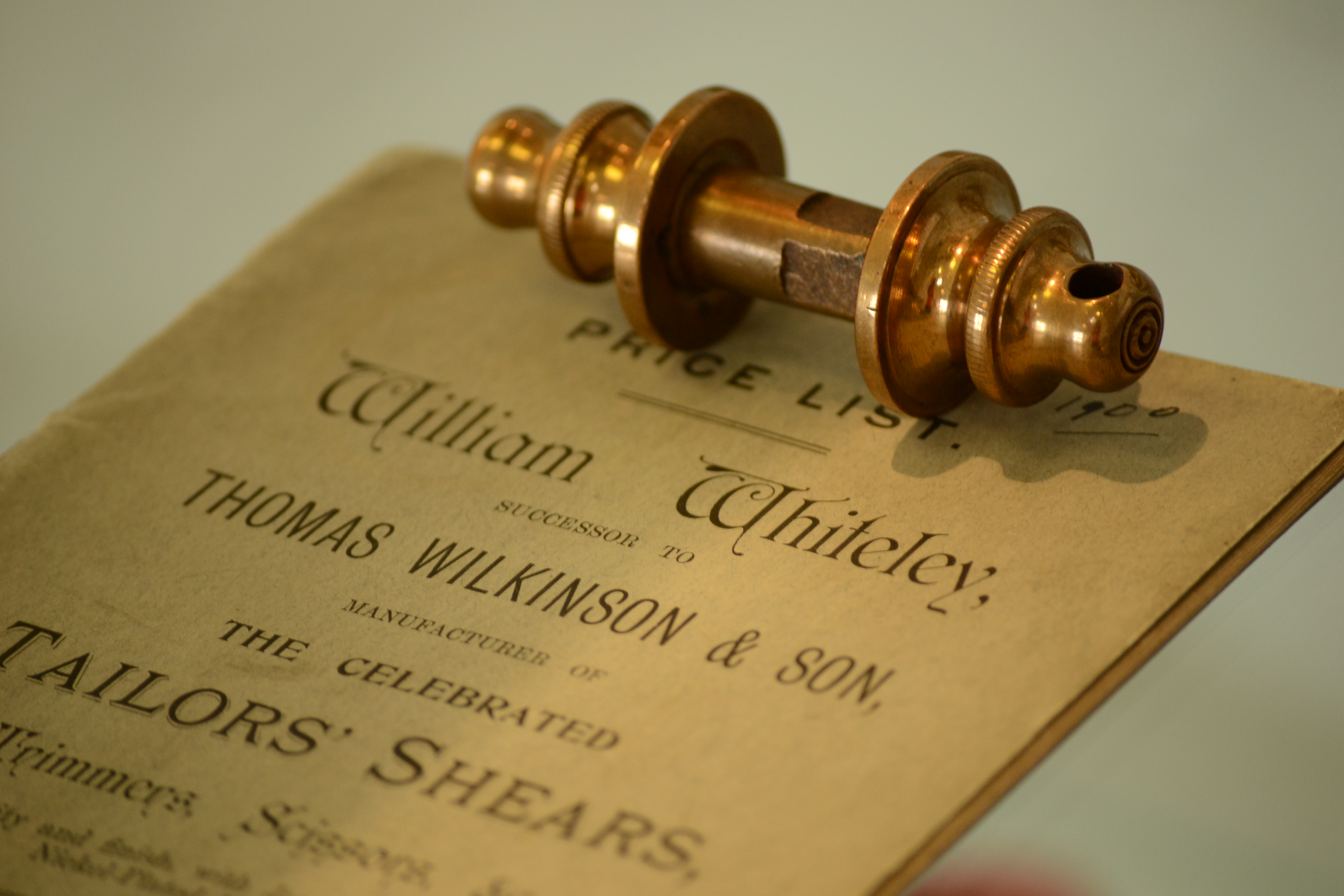
In 1879, William Whiteley acquired the assets and trademarks of Thomas Wilkinson & Son. It brought together two Sheffield scissor-making histories, and gave the Wilkinson name a place in our story that continues today.
A Sheffield name with Royal recognition
Thomas Wilkinson was making scissors in Meadow Street by 1822. As the business developed, it moved through several Sheffield addresses, including Fitzwilliam Street and Workhouse Lane, before opening on High Street in 1840. These were the early chapters of a firm that would become known for the quality and ingenuity of its scissors.
Royal recognition came in 1839, when the firm received an appointment as manufacturers of scissors in ordinary. By the following year, it was advertising its role as a manufacturer to Queen Victoria and Prince Albert. Thomas Wilkinson then became Master Cutler in 1843, and his son George, who joined him in the business, would hold the same office in 1861.
Yet even royal patronage could not protect a business from financial difficulty. In 1844, the stock of the High Street shop was auctioned to pay creditors. The Wilkinsons moved to New Church Street and continued making the scissors that would soon attract attention on a much larger stage.
Scissors at the Great Exhibition
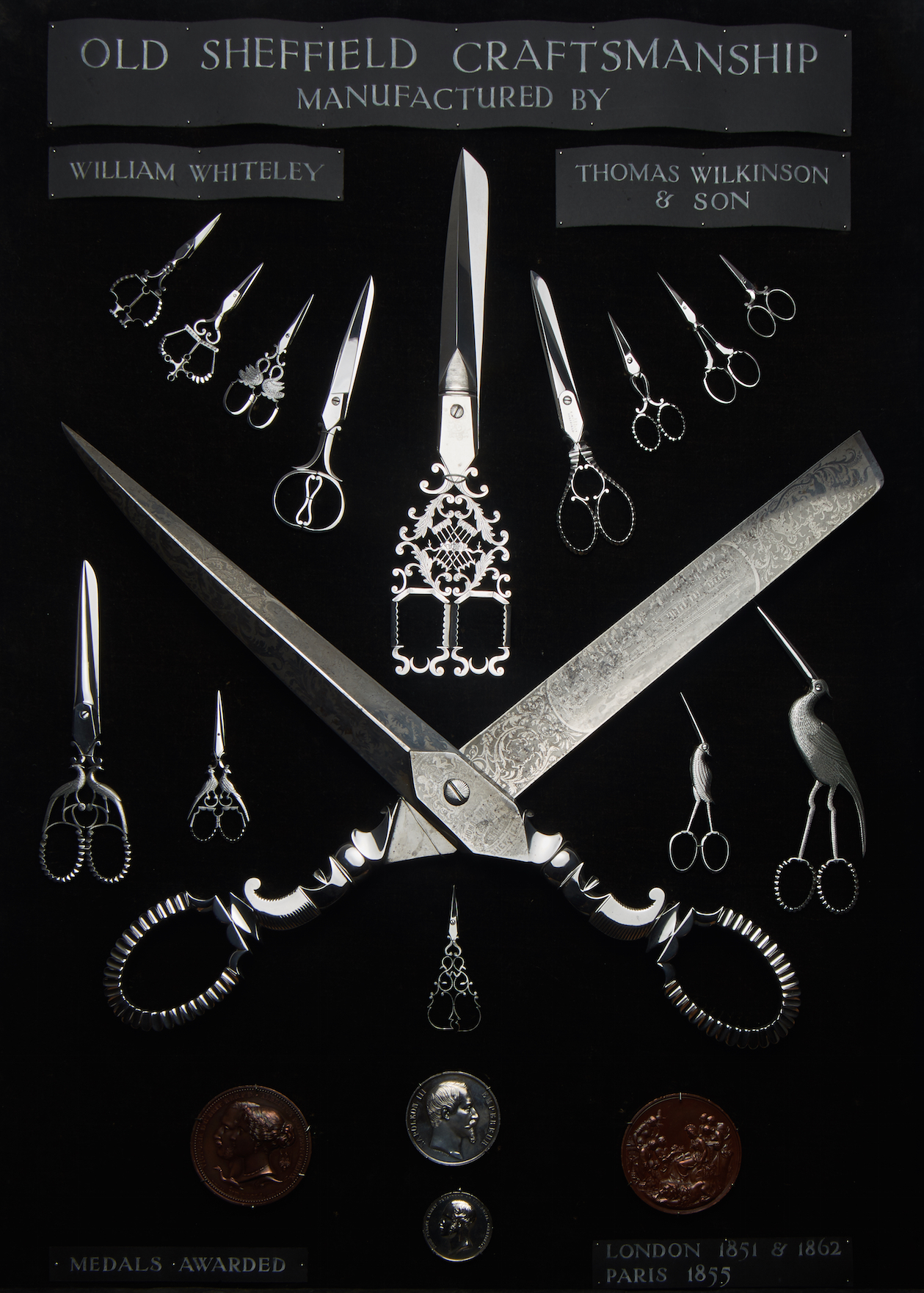
In 1851, the Great Exhibition brought manufacturers and their work to the Crystal Palace in London’s Hyde Park. Both Wilkinson and Whiteley exhibited scissors and won medals, placing their Sheffield craftsmanship before an international audience.
Wilkinson’s display included an ornate example of scissors made for the Queen, with royal emblems and decorative scrollwork filed from solid steel. Another pair measured an extraordinary 23 inches, with the Exhibition building etched onto the blades. It is quite a change of scale from the sewing scissors most of us keep at home!
Further prizes followed in Paris in 1855 and London in 1862. Alongside these elaborate exhibition pieces, however, Wilkinson was developing practical tools for people who earned their living with scissors in their hands.
Joining Whiteley in 1879
Thomas Wilkinson died in 1863, and his son George, in 1868. The business continued at New Church Street, but its ownership entered a new period. By 1871, Edward Burhill Laycock had taken an interest in the firm. His venture, Laycock Bros, intended to sell Wilkinson products and use the established trademarks.
However, in 1879, Laycock Bros became bankrupt, with estimated debts of £7,500. William Whiteley & Sons acquired Wilkinson’s assets and marks, bringing the business into the Whiteley story. The acquired marks included a bow and three arrows, as well as a device incorporating the letters TW.
By then, Whiteley was established in Rockingham Street, which would remain our home in the 1970s. We already had our own exhibition medals and generations of scissor-making experience. The acquisition brought the Wilkinson name into a business working in the same specialised Sheffield trade.
That is the history behind the incorporation of Thomas Wilkinson & Son into what we now call Whiteley. It explains why the two names remain connected, long after the original Wilkinson family’s involvement ended.
The Wilkinson Name Today
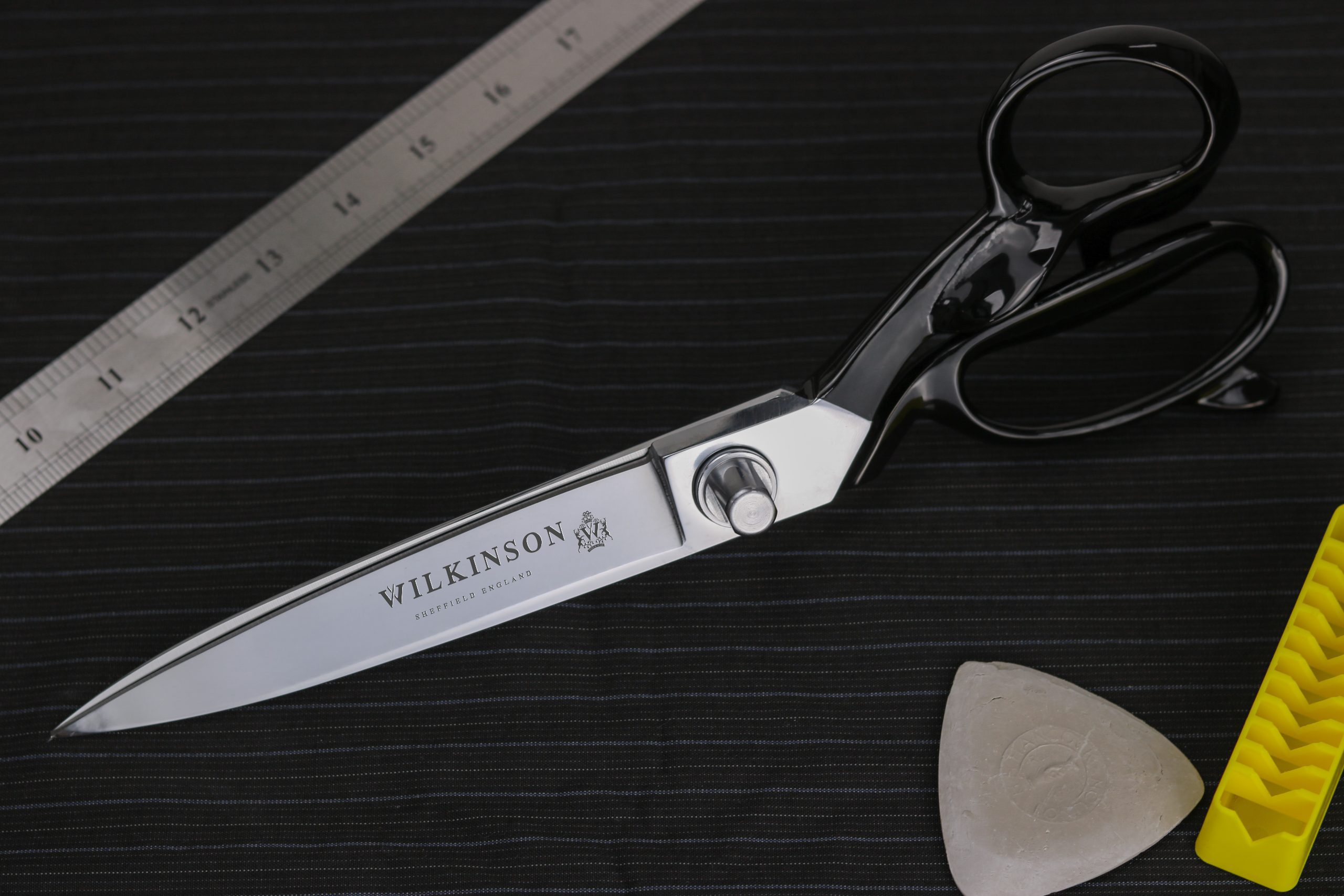
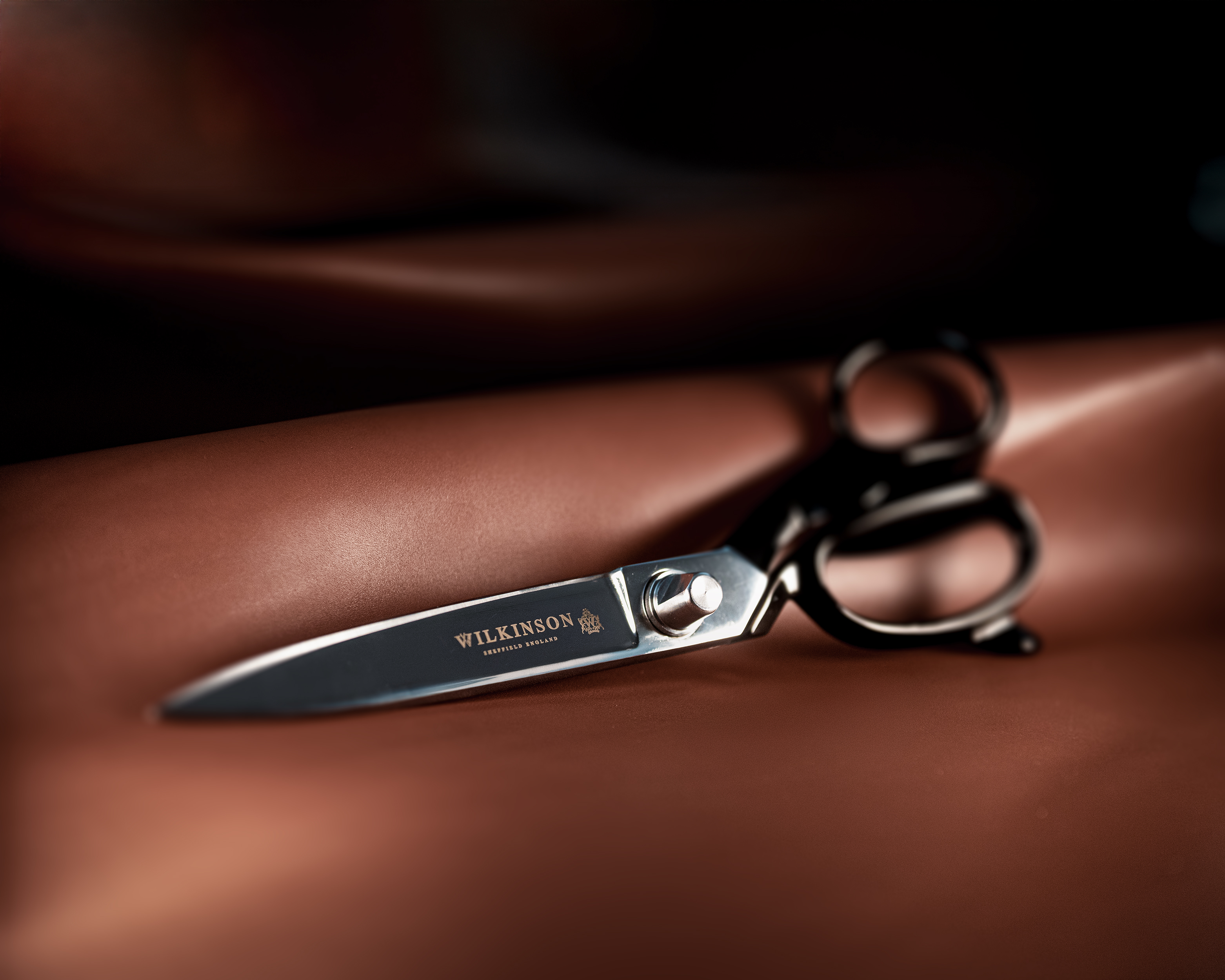
Today, we continue to use the Wilkinson name on scissors and shears made in Sheffield. Our Wilkinson by Whiteley range includes cutting tools for tailoring and dressmaking, amongst other cutting tasks, carrying that history into workshops and homes all around the world.
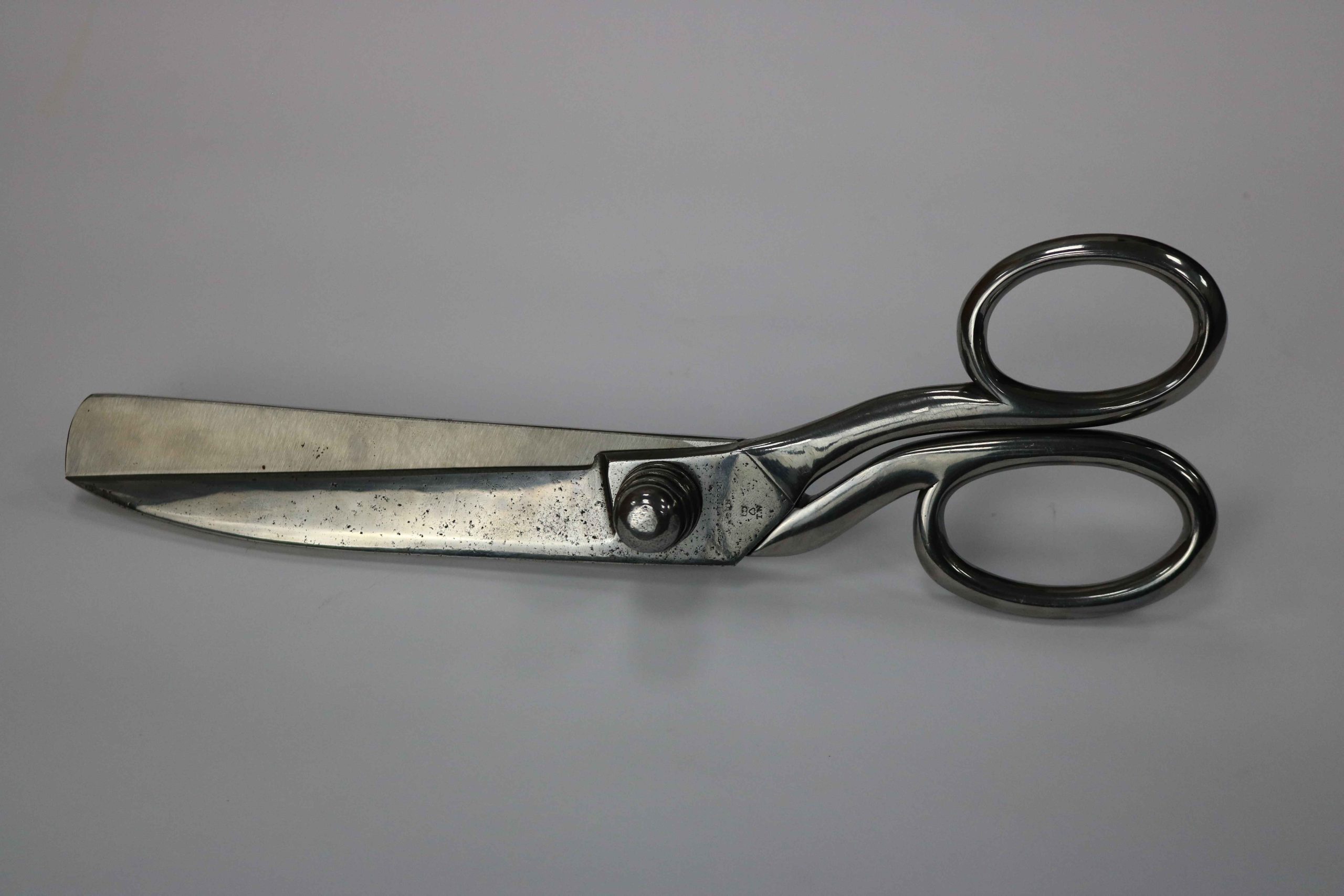
Look at the raised handles of a pair of sidebent fabric shears, or the substantial bolt on our classic tailors’ shears, and you can see how much thought goes into the way a tool meets the hand and the cutting table. The bolt helps with picking the shears up and putting them down, and the ergonomic handle shape supports long-term use.
This can be seen in both our range of 10” Tailors Shears and 12” Tailors Shears, our range of fabric shears, and 7” DIY Shears.
At Whiteley, it is important that the Wilkinson name and story is present within our range. We would not be where we are without the makers whose work paved the way for the craftmanship, and art of scissor-making we continue today.
For a tailor working across a length of cloth, the position of the shears’ handle matters. They need room for the hand whilst allowing the lower blade to stay close to the cutting surface.
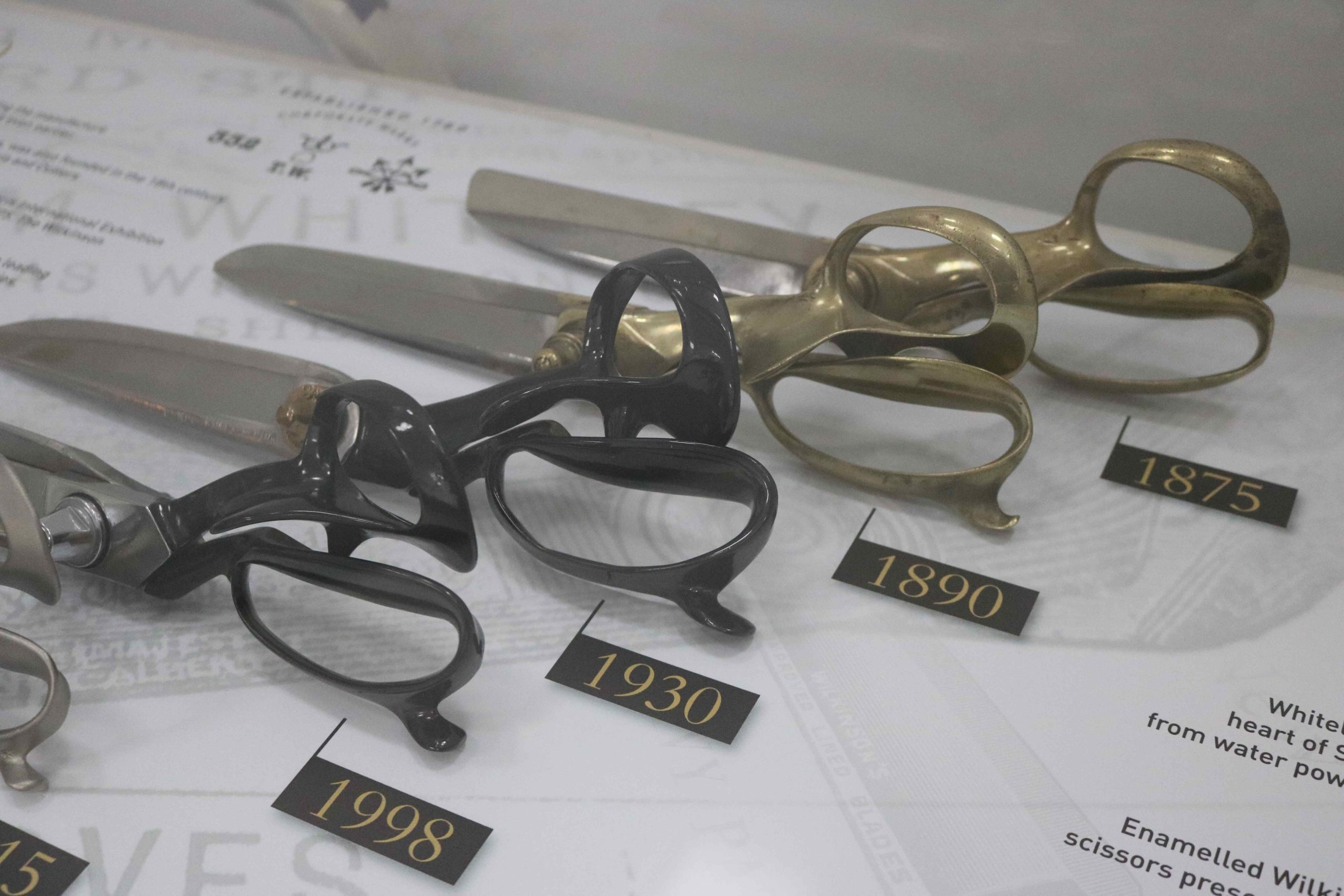
In 1800, Thomas Wilkinson patented the famous sidebent design seen on most scissors and shears today. By angling the handles upwards, the design allows the lower blade to run flat along the fabric, helping the user make a smooth cut without the lower handle catching on the table. It is a familiar shape to anyone who uses traditional fabric shears today.
Wilkinson also made brass-handled tailors’ scissors. During manufacturing, molten brass flowed around the blade’s tang (often referred to as a finger rest, it is the small hook-like extension seen on the handle) and through small holes in it, forming the handle and its attachment together. The mould gave the handle a shape intended to fit the hand more comfortably and reduce fatigue.
Other improvements addressed the way the blades worked together. Spring mechanisms helped maintain pressure at the cutting edges, whilst a regulating spring screw was intended to resist loosening when cutting strong materials. These details show how carefully the firm considered the everyday demands placed on its tools.