



Jade Shemwell
- We are spotlighting National Shakespeare Day to celebrate our scissors and shears’ role in theatre, film, and television, from our beginnings in 1760 to now
- • Our scissors and shears have been used to help shape centuries of theatre craft such as costume making & set design
- We are honoured that so many brilliant creatives and makers have chosen to use Whiteley made scissors and shears.
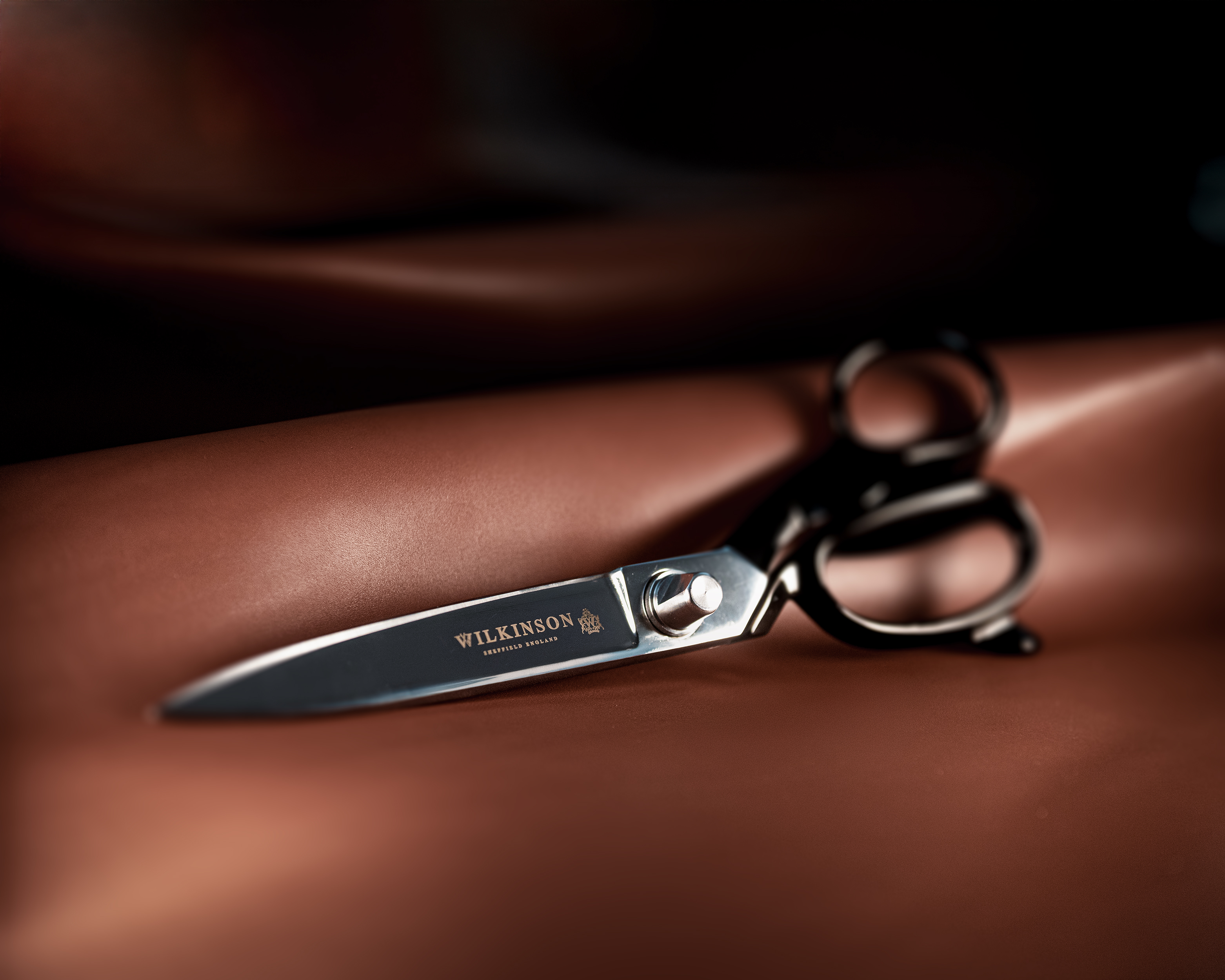
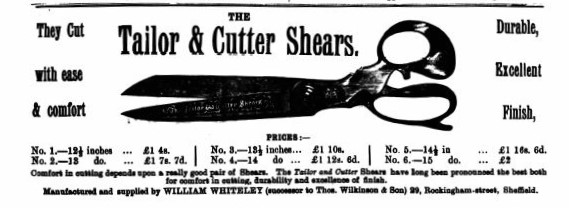
At Whiteley, we love to embrace any opportunity to celebrate our heritage, and this year we have decided to highlight National Shakespeare Day for that very reason. Celebrated on the 23rd of April, it commemorates the birth month and date of passing of the famous playwright, and his long-lasting influence on theatre, the arts, and literature.

How Whiteley scissors have helped to shape costume-making
Our scissors have underpinned costume-making for a long time, aiding the cutting and styling of complex garments with distinctive silhouettes and decorative patterns. Linking back to the Georgian era, scissors like ours would have been indispensable in workshops and theatre wardrobes, where durability was needed to meet the growing demands of stage production and performances.
As costumes became more elaborate, with layered fabrics and intricate trims, and the need for tools which could cut with precision only increased. It was in the later Georgian era when Thomas Wilkinson patented the famous sidebent scissors design, built for thick fabrics and heavy-duty use.
The offset design allows the blades to stay flat on a table, letting tailors and costume-makers smoothly cut fabrics without catching. It was a major innovation at its time (and still is!), addressing the desire for a tool which could handle heavy fabrics without disturbing the material on the cutting table.
From Shakespeare’s Globe and West End productions to smaller theatre performances, the tradition of craftsmanship and the need for high quality tools (such as shears) remains key in supporting the creation of garments that bring characters to life on stage.
The makers choosing Whiteley scissors for their work
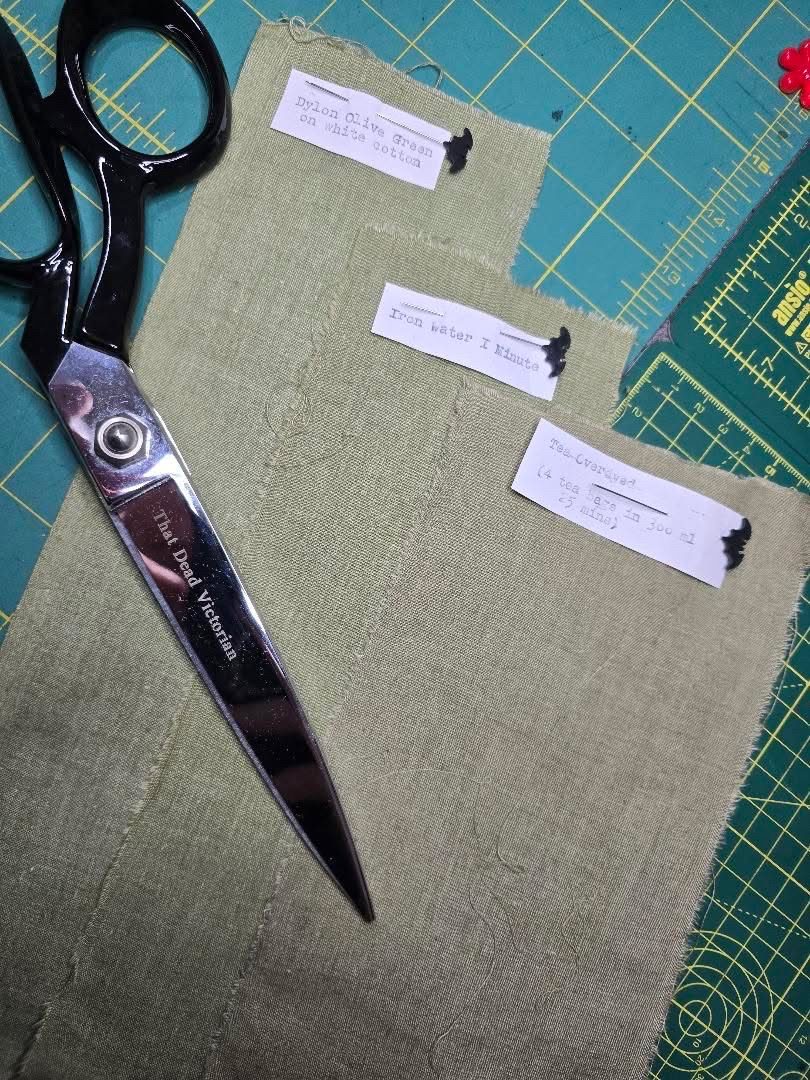
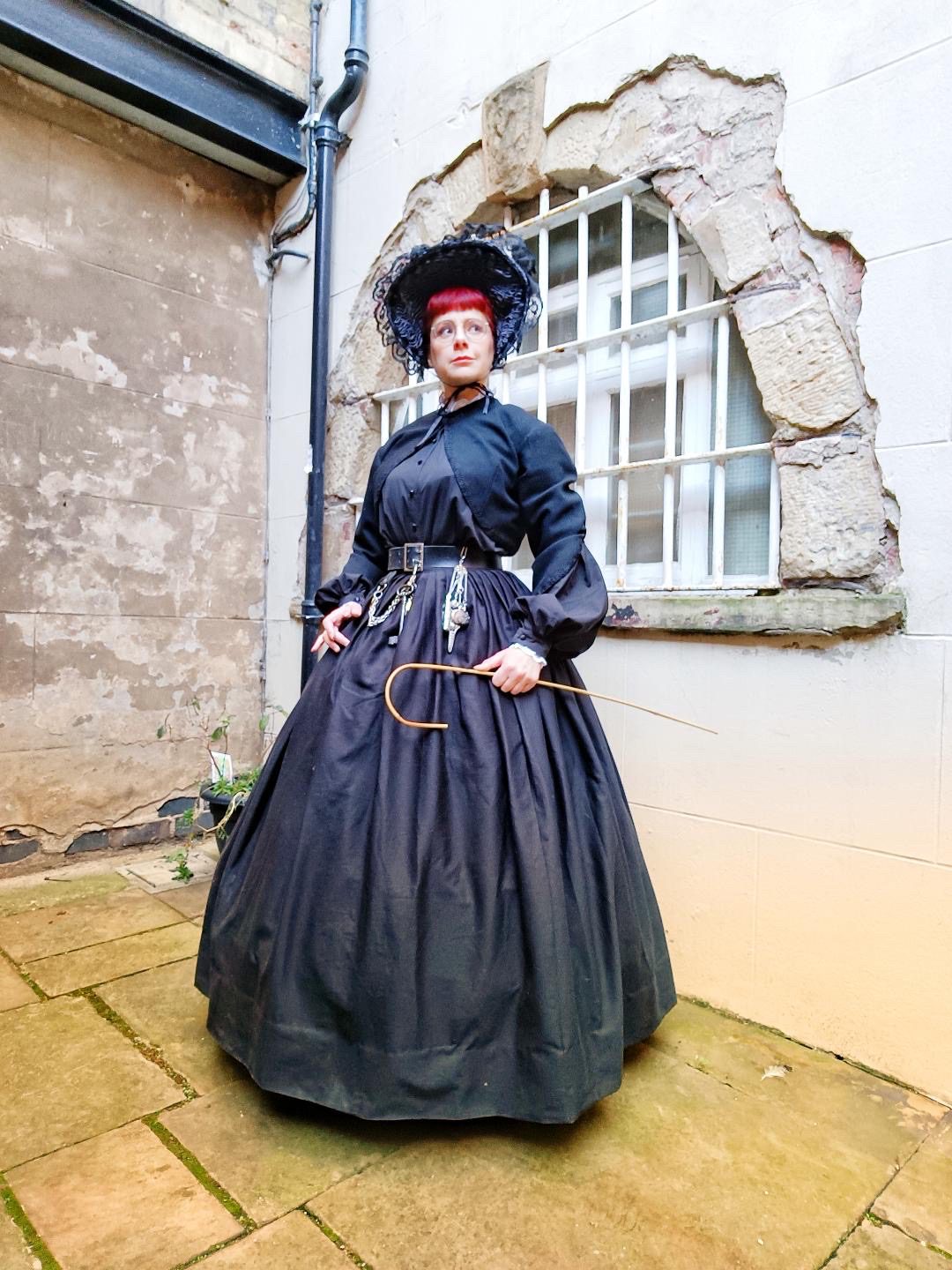
We are proud to know that Whiteley scissors have been used in film, television, and theatre. Tailors and dressmakers like Rachel Blanc (@the_northern_seamstress), Emma Yeah (@thatdeadvictorian_workroom), Sara Fay (@tiny.tailor), and Zach Pinsent (@pinsent_tailoring) have all worked on incredible costumes, specialising in historical fashion.
Other makers like Hannah Lewis-Blanc (@hoopsadaisyuk) specialise in incredible hand-embroidery, creating detailed work that can be used to add depth to accessories for characters and theatre sets. Rachel Blanc (@the_northern_seamstress) also does a lot of upholstery work, a key skill for creating theatre sets and environments.
All work closely with traditional techniques, striving for historical accuracy in both method and materials to recreate garments as they would have been made at the time. In work such as this, reliable tools that create clean and accurate cuts are essential. With a rich heritage ourselves, we are proud to support these techniques as they keep skills alive which have been passed down through centuries, something we also champion with the skills of our craftsmen.
Speaking about her work Emma Yeah (@thatdeadvictorian_workroom) said: “I’m fascinated by clothing and textiles as a telescope to the past, and how they communicate identity, work, and authority.
“Shakespeare’s works often explore these structures of power, and performances use costume to signal status and character, allowing an audience to understand relationships and hierarchy at a glance.
“My work draws on historical garments, particularly women’s institutional dress, and gives me a glimpse into how people may have moved and felt. I like to work in a slow, hands-on way, often using traditional techniques and materials. Having beautiful tools with their own history, like my Whiteley shears, adds to both my enjoyment of the process and the result, and gives me an extra, tiny thread of connection to the people I’m researching and interpreting.”
Hannah Lewis-Blanc (@hoopsadaisyuk) said: “Sewing and embroidery runs in my family. My grandma was a seamstress and my mum inherited the skills and taught my sisters and I. My younger sister Rachel is the Northern Seamstress. I’m so proud of her and what she’s accomplished. I love watching and reading Shakespeare, period dramas, anything by the Brontë sisters and Jane Austen. When I see or read about the characters embroidering it makes me proud to have the skills and knowledge to keep up this beautiful historical craft.
“My favourite pieces are ones I’ve made for family or friends. Usually the initials I create for my friends’ babies. I haven’t worked on any productions but I sell my PDF patterns on Etsy which pays enough money to cover my son’s piano lessons. I LOVE both of my Whiteley scissors. They are by far superior to any that I’ve ever used and I really treasure them. I use them every single time I sew and stitch and they are still as sharp and precise as ever!”
If you are interested in taking up a theatre craft such as costume-making or set design pieces, or you would like to use high quality tools for your crafting needs, take a look at our wide range of scissors and shears.
Whilst William Shakespeare died in 1616, a little over a century before Whiteley was founded, his work and legacy theatre and in the arts preceded him. His plays are regularly performed in theatres globally today, as well as film adaptations made (see below):
In the Georgian era, when Whiteley was established, Shakespeare’s work was starting to develop a global audience, with French and German writers kicking off the practice of translating his works to be performed in non-English speaking countries.
In the UK, adaptations and modernisations of his works gained popularity with figures like actor, David Garrick, apparently revolutionised Shakespearean performance through naturalism rather than declamation. He popularised “bardolatry”, a term used to describe the intense adoration of Shakespeare, and organised the 1769 Shakespeare Jubilee, which established Shakespeare’s birthplace, Stratford-upon-Avon, as a tourist hotspot for Shakespeare & theatre fans.
Costumes played an integral role in the changing stage picture, with productions placing more value on presentation and detail. During David Garrick’s tenure as manager at London’s Theatre Royal Drury Lane, the oldest theatre site in the city still in use, he brought in managed costumes and continental-influenced garments, to improve the theatre experience.
Behind the scenes, skilled cutting and tailoring work for costume design and maintenance was essential, relying on high quality tailoring shears like the ones we have been making for nearly three centuries.